
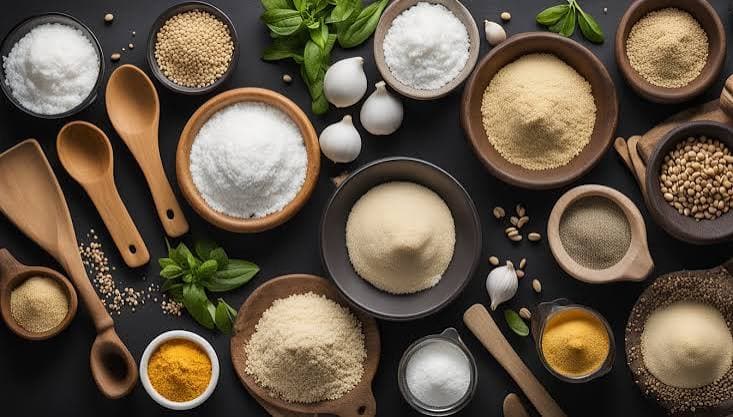
Allulose is increasingly being positioned as more than a high-intensity sweetener. Its ability to provide bulk, texture, browning and freezing-point functionality while contributing very few calories makes it one of the more commercially attractive tools for reducing sucrose in mainstream food and beverage formulations.
Unlike stevia or monk fruit, which are typically used at very low inclusion rates and often require bulking agents, allulose can replace a meaningful portion of the physical role played by sugar. It is approximately 70% as sweet as sucrose and provides sugar-like functionality across applications such as bakery, beverages, dairy, frozen desserts and confectionery.
That difference is important for procurement.
The question is no longer simply whether food manufacturers will adopt allulose. The more strategic question is:
Can production capacity scale quickly enough to support allulose becoming a genuine bulk sugar-replacement platform?
Current market estimates point toward continued expansion. Fortune Business Insights estimates the global allulose market at $221.6 million in 2026, rising to approximately $491.9 million by 2034, equivalent to a 10.48% CAGR. Other market studies produce different absolute values because category definitions vary, but the direction of growth is consistent.
Why Allulose Requires a Different Supply-Chain Model
Allulose is a rare sugar that is generally produced through an enzymatic conversion of fructose rather than being harvested directly as a conventional agricultural sweetener.
Matsutani, for example, produces its ASTRAEA™ allulose through enzymatic epimerization of fructose using a proprietary D-psicose epimerase. Its commercial ingredient is more than 95% pure and approximately 70% as sweet as sucrose.
This creates a supply chain with several important dependencies:
Corn or other carbohydrate feedstock → starch/fructose production → enzymatic conversion → purification → crystallization or syrup production → packaging → food manufacturer.
Consequently, procurement teams need to monitor not only allulose plants but also:
Fructose availability
Enzyme technology
Purification capacity
Crystallization capacity
Energy costs
Water availability
Food-grade manufacturing standards
Regional logistics
Regulatory access
This is one reason production capacity cannot be evaluated simply by counting announced allulose factories.
North America Remains a Critical Capacity Hub
North America has become one of the most important regions for commercial allulose supply because of strong demand for reduced-sugar products and regulatory acceptance.
Tate & Lyle describes itself as a leader in allulose capacity and says it is increasing capacity for both conventional and Non-GMO DOLCIA PRIMA® Allulose Syrup. The company also identifies itself as the only U.S.-based producer of both crystalline and syrup forms.
Ingredion's ASTRAEA® allulose is manufactured in Mexico, providing another North American production base. Ingredion documentation identifies crystalline and liquid allulose as originating from its Mexico operations.
This regionalization is strategically important for buyers serving the U.S. market.
Rather than depending exclusively on imports from Asia, North American customers increasingly have access to regional manufacturing and supply networks.
That can reduce:
Ocean freight exposure
Import lead times
Tariff uncertainty
Cross-border logistics risk
Inventory requirements
For procurement teams, North American capacity expansion should therefore be one of the first indicators monitored when evaluating future allulose availability.
Asia Is Also Building the Capacity Base
Asia is becoming another important center of allulose production and commercialization.
South Korea has emerged as a significant production hub, while Chinese suppliers are adding to global availability. Industry analysis for 2025–26 identified a new Korean facility with approximately 13,000 tonnes/year of capacity, alongside existing Japanese and Chinese production. These figures should be treated as industry estimates rather than a consolidated global capacity database because producers do not consistently publish comparable capacity figures.
Samyang Corporation markets Nexweet® Allulose and identifies allulose among its specialty food ingredients. The company operates a broader global food-ingredient network spanning offices and production facilities.
The strategic significance is clear:
The allulose supply base is gradually moving from a small number of specialist producers toward a more geographically distributed manufacturing ecosystem.
That is positive for buyers, but it does not eliminate concentration risk.
Capacity Announcements Do Not Equal Available Supply
One of the biggest procurement mistakes would be to interpret announced capacity as immediately accessible inventory.
New capacity has to move through several stages:
Technology validation
Plant construction
Commissioning
Process optimization
Food-grade qualification
Customer trials
Regulatory clearance where required
Commercial production
Capacity utilization ramp-up
A plant nominally capable of producing tens of thousands of tonnes may initially operate well below nameplate capacity.
This distinction matters because demand can increase faster than effective supply.
Industry commentary heading into 2026 described strong demand growth and increasing pressure on available allulose supply, particularly as manufacturers searched for alternatives in sugar-reduction formulations. It also highlighted capacity expansion in the U.S. and Korea as an important response.
Procurement teams should therefore track effective capacity, not just announced capacity.
The Biggest Opportunity: Allulose Can Replace More Than Sweetness
Allulose has a major structural advantage over many high-intensity sweeteners.
It can contribute:
Sweetness
Bulk
Solids
Browning
Mouthfeel
Moisture management
Freeze-point depression
Texture
Ingredion describes ASTRAEA® as providing sugar-like sweetness and functionality, including bulking, browning and freeze-point depression.
Matsutani similarly highlights its sugar-like taste and baking performance.
This means allulose can potentially replace several functions that otherwise require multiple ingredients.
For formulators, that creates an important commercial proposition:
Sugar reduction without completely rebuilding the physical structure of the product.
For procurement teams, however, this also means allulose demand could become significantly larger if manufacturers begin using it as a bulk ingredient rather than a specialty sweetener.
Bakery Could Become a Major Capacity Test
Bakery is one of the applications where allulose's functionality becomes particularly valuable.
Sugar contributes much more than sweetness to baked goods. It influences:
Browning
Moisture
Spread
Texture
Tenderness
Volume
Flavor development
Replacing sugar with a high-intensity sweetener alone can therefore create significant formulation problems.
Allulose's ability to provide some of these physical functions makes it attractive for reduced-sugar cookies, cakes, bars and other baked products. Matsutani specifically highlights its baking and browning performance, while Ingredion lists bakery among its major applications.
If allulose adoption expands substantially in bakery, procurement demand will shift from kilogram-scale specialty purchases toward continuous bulk ingredient contracts.
That would materially change the supply economics of the category.
Beverage Demand Adds Another Capacity Layer
Beverages are another important growth opportunity.
Allulose can contribute sweetness and solids while working alongside high-intensity sweeteners. This allows formulators to combine allulose with stevia, monk fruit or other sweeteners to create a more complete sugar-reduction system.
Tate & Lyle lists beverages among its applications for DOLCIA PRIMA® Allulose, while Ingredion similarly positions allulose for reduced-sugar beverage formulations.
This creates a particularly important procurement trend:
Allulose may increasingly become the “bulk” component of a multi-sweetener system rather than a standalone sweetener.
That could increase demand even when formulators are not replacing 100% of the sugar.
Crystalline vs Syrup Capacity Matters
Procurement teams should also distinguish between crystalline allulose and liquid/syrup allulose.
Crystalline material is useful where dry blending, powders and controlled solids addition are required.
Syrup is attractive in:
Beverages
Sauces
Dairy
Frozen desserts
Liquid formulations
Certain bakery applications
Tate & Lyle explicitly highlights both crystalline and syrup formats, while Ingredion's Mexico operation supports crystalline and liquid allulose offerings.
Therefore, a market may appear adequately supplied on a total-tonnage basis while still experiencing shortages in a particular physical form.
Total capacity ≠ usable capacity for every application.

Regulatory Expansion Can Unlock New Demand
Regulatory acceptance remains one of the most important variables determining how quickly allulose demand can scale.
In the U.S., FDA guidance allows allulose to be excluded from the “Sugars” and “Added Sugars” declarations on Nutrition Facts labels under the relevant regulatory framework, significantly improving its value for sugar-reduction formulation.
Outside the U.S., regulatory access is developing at different speeds.
Samyang obtained novel-food approval for allulose in Australia and New Zealand in 2024, while allulose also received approval for commercial sale in India through an FSSAI process.
This creates a second procurement indicator:
New regulatory approvals can produce demand shocks before new capacity has time to respond.
Companies planning international launches should therefore monitor regulatory developments alongside plant announcements.
Production Economics Will Determine How Quickly Allulose Becomes a Bulk Ingredient
Allulose still carries a cost disadvantage compared with conventional sugar.
This is partly a scale problem.
Sugar is one of the world's most established commodity food ingredients, supported by enormous agricultural and processing infrastructure. Allulose is operating at a much smaller scale.
For allulose to become a genuine bulk sugar replacement, producers must improve:
Conversion yields
Enzyme efficiency
Purification efficiency
Crystallization economics
Energy consumption
Plant utilization
Logistics
Co-product economics
The commercial race is therefore not simply about building more plants.
It is about lowering the cost per usable kilogram.
This is why large ingredient companies may have an advantage: they can leverage existing carbohydrate-processing infrastructure, distribution networks and customer relationships.
Procurement Risk Is Shifting From Availability to Capacity Allocation
As more producers enter the market, the next procurement challenge may not be absolute scarcity.
Instead, buyers may experience allocation differences between strategic customers and spot-market customers.
Large beverage and food manufacturers with long-term agreements may receive preferential access to production capacity, while smaller buyers remain exposed to spot pricing and distributor inventories.
That makes contract structure increasingly important.
Buyers should consider:
Multi-year supply agreements
Minimum-volume commitments
Flexible volume bands
Reserved production capacity
Dual-source qualification
Regional inventory
Alternative syrup/crystalline specifications
Price-adjustment mechanisms
The objective is to convert uncertain spot availability into predictable supply.
Ranking the Capacity Indicators Procurement Teams Should Track
Rank | Capacity indicator | Why it matters |
|---|---|---|
1 | Effective commercial capacity | Shows how much material is actually available |
2 | New plant commissioning | Indicates when additional supply can enter the market |
3 | Regional production footprint | Reduces dependence on one geography |
4 | Crystalline vs syrup capacity | Determines application-specific availability |
5 | Plant utilization rates | Separates nameplate capacity from real output |
6 | Fructose/feedstock availability | Determines upstream production flexibility |
7 | Processing yield improvements | Influences future production economics |
8 | Regulatory approvals | Can trigger sudden regional demand increases |
9 | Long-term customer contracts | Indicates how much capacity is already committed |
10 | Spot-market inventory | Provides the clearest short-term availability signal |
This ranking gives procurement teams a more useful early-warning system than simply monitoring allulose market-size forecasts.
Key Producers and Supply Platforms to Monitor
The competitive landscape includes established ingredient companies and specialist rare-sugar producers.
Current market research identifies Cargill, Ingredion, Tate & Lyle, CJ CheilJedang and Samyang among the leading allulose companies, alongside Matsutani, Bonumose, Heartland Food Products Group, Anderson Advanced Ingredients and Shandong Bailong Chuangyuan Bio-Tech.
The important procurement distinction is that these companies do not necessarily compete on identical supply models.
Some offer:
Integrated ingredient systems
Regional manufacturing
Crystalline allulose
Syrup formats
Specialty sweetener blends
Application-development support
Others compete primarily through rare-sugar technology or specialized production.
Therefore, procurement teams should evaluate suppliers based on delivered application capability, not simply brand recognition.
What Buyers Should Do Now
1. Track Capacity Before Signing Large Reformulation Projects
If allulose is being considered for a national or global SKU rollout, procurement should verify whether qualified suppliers can support the projected volume.
2. Qualify More Than One Producer
A second supplier should be technically qualified before a large-scale product launch.
3. Separate Form Requirements
Crystalline and syrup allulose should be treated as separate procurement categories.
4. Build Flexible Sweetener Systems
Combining allulose with stevia, monk fruit or other sweeteners can reduce dependence on a single ingredient specification.
5. Monitor Regional Regulation
New approvals can rapidly change local demand.
6. Negotiate Capacity, Not Just Price
For strategically important formulations, reserved production capacity may have more value than a small discount per kilogram.
7. Calculate Cost-in-Use
Compare allulose against the complete sugar-replacement system, including other bulking agents, texturizers and high-intensity sweeteners that may otherwise be required.
The Intelligence Takeaway
Allulose is scaling because it occupies a different position from high-intensity natural sweeteners: it can replace not only sugar's sweetness but also part of its physical functionality.
That makes it particularly attractive for bakery, beverages, dairy, frozen desserts, nutrition products and other formulations where removing sugar creates structural problems.
Production is becoming more geographically distributed, with important supply bases across North America and Asia. Tate & Lyle is expanding allulose syrup capacity, Ingredion operates allulose production in Mexico, and Asian producers including Samyang and other suppliers are building the broader supply ecosystem.
The key procurement insight is that announced capacity should not be confused with qualified, available capacity.
As allulose moves toward bulk sugar replacement, procurement teams should monitor plant commissioning, utilization, crystalline-versus-syrup output, upstream fructose supply, regulatory expansion and long-term capacity commitments.
The winning strategy will be to secure capacity visibility before demand becomes a capacity-allocation problem.
Crystalline Fructose CAS: 57-48-7